About
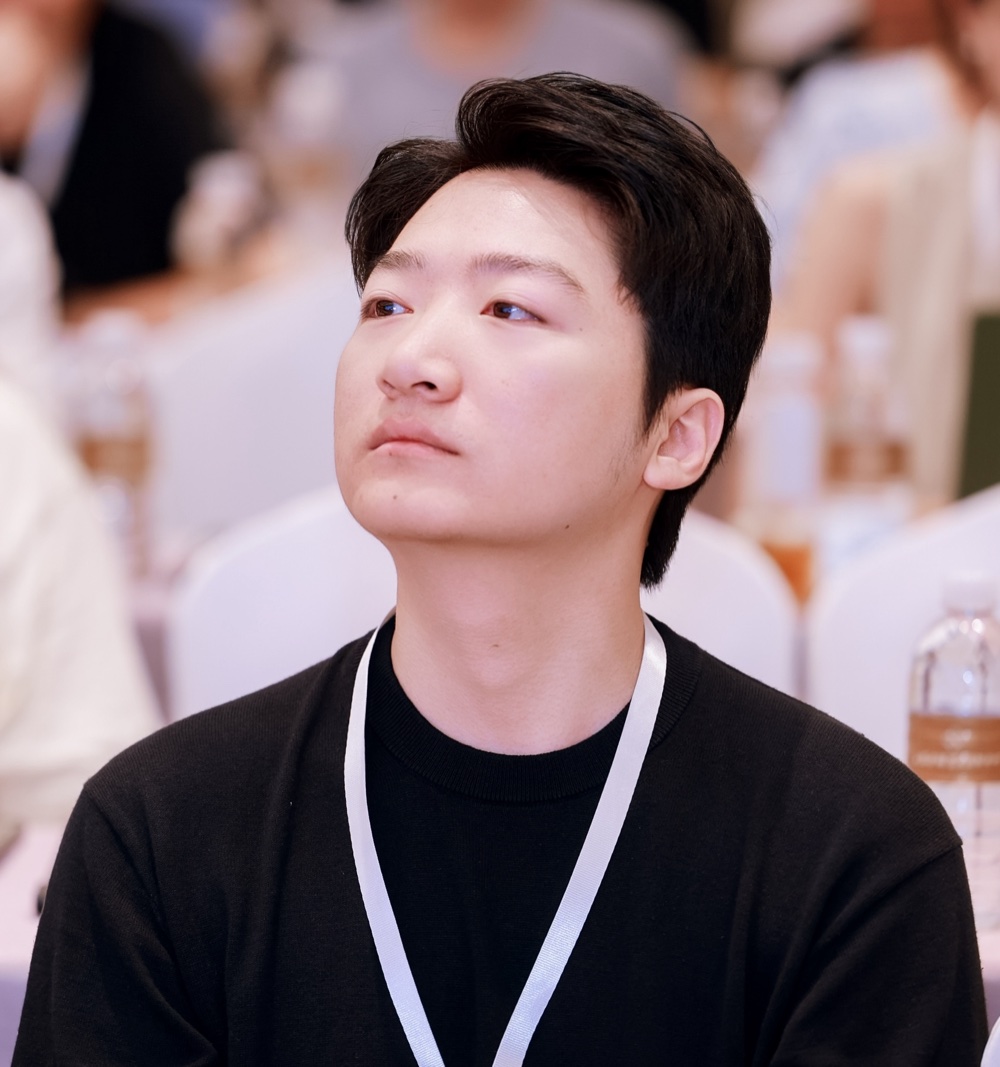
I am a PhD candidate in the Department of Physics at King's College London, supervised by Prof. Giovanna Tinetti. I work out what the atmospheres of planets around other stars are made of, and how much of that we can honestly claim to know.
I came to exoplanets by way of Toronto and UCL, then spent a year and a half at Blue Skies Space as a Junior Support Scientist, building performance simulations for the Twinkle and Mauve space missions. My first paper, on what Twinkle can contribute to atmospheric characterisation after JWST, is accepted in RASTI.
Most of my days are spent between radiative-transfer models, Bayesian inference, and an unhealthy number of matplotlib figures.
BSc Physics & Astronomy, York University → MSc Planetary Science (Distinction), UCL → PhD Physics, King's College London
Research
My main line of work is transmission-spectroscopy retrieval of exoplanet atmospheres in the JWST and Ariel era: fitting radiative-transfer models to the starlight filtered through a planet's atmosphere during transit, and treating the resulting posteriors with the scepticism they deserve.
- (a)
Minor molecules
SO2, NH3, H2S, HCN: the trace species whose detection (or confident non-detection) carries outsized information about an atmosphere's chemistry.
- (b)
Chemistry as formation context
What abundance patterns such as C/O, metallicity, N/O and S/O can, and cannot, tell us about where and how a planet formed.
- (c)
Information content
Which claims a given spectrum actually supports: degeneracies from clouds, hazes and stellar contamination, and the limits of JWST and Ariel data.
Publications
- [1]
Atmospheric Characterisation with the Twinkle Space Telescope Following Advances from JWST Observations
Talks & news
-
London Exoplanet Meeting
talk · London
-
Ariel Open Conference 2026: Science, Mission & Community
two contributed posters · ESA ECSAT, Harwell Campus
-
Exoplanets and Planet Formation (EPF 2025)
two contributed posters · Tsung-Dao Lee Institute, Shanghai
-
Earth 2.0 Space Mission Annual International Science Meeting
contributed talk · Shanghai Astronomical Observatory, Shanghai
-
Spectroscopy of Exoplanets: Over All Wavelengths
poster · High Leigh, Broxbourne · Best Poster Prize
-
London Exoplanet Meeting
talk · London